Set rates you can defend
Pair utilization against overhead allocation to show what an hour in a given space actually costs to operate before you argue about what to charge for it.

Data and reporting
Utilization, revenue, demand, and a complete record of every decision - reported from the same data your staff already entered by doing their jobs.
Utilization
Cost recovery starts with an honest answer to one question: when is this building not being used? The platform answers it per space and per sub-resource, without anyone tallying a spreadsheet.


Revenue and demand
Revenue by organization, activity in progress, and what is waiting on someone's approval - on one dashboard rather than three reports nobody runs.

Accountability and exports
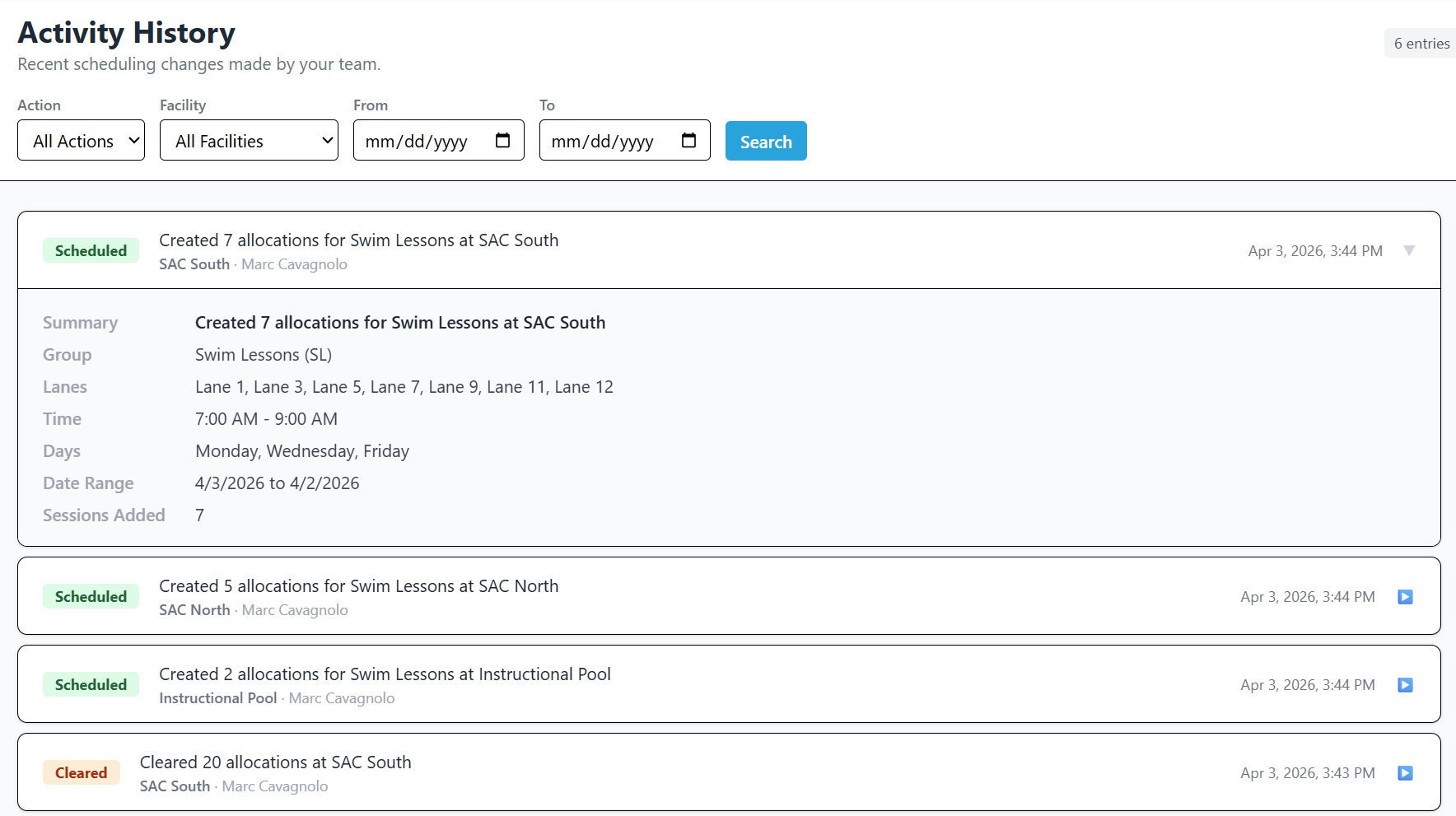
When a board member, a council member, or a community group asks why a request was handled the way it was, the answer should take a minute to find - not a week.
Reports are only worth running if they change a decision. These are the four they change most often.
Pair utilization against overhead allocation to show what an hour in a given space actually costs to operate before you argue about what to charge for it.
Bring booked hours, revenue by facility, and demand patterns to the budget conversation instead of an anecdote about the gym being busy.
Approvals, denials, and displacements are all on the record, so a policy review starts from what happened rather than what people remember.
When a group asks why they did not get the time they wanted, the schedule, the request queue, and the audit trail tell a consistent story.
Every hour booked in the platform is a row you can report on. Start a guided trial and see what your own calendar looks like measured.